

We understand the nuances that come with asking people to gather what may be a large group in the same place, at the same time, to do the same activity or project. Use the flow chart linked below in the resources section to navigate where and how your group can complete your service project. Service projects must contribute to to the focus of the Kindly Hearts Initiative that supports children and teen experiencing foster care or homelessness.
For chapters and associations: If you have a Local Impact Organization that you currently work with, it is expected you will complete your service with that organization. We recognize your chapters or groups may be too large to all be in one space at one time. Work with your Local or Key Impact Organizations to come up with a shift or rotation system so that all Sisters are able to be involved.
Participation in Day of Service is required for chapters. The Philanthropy Team feels strongly about the connection between participating in service initiatives and the intrinsic motivation that your chapter or group will gain to host and execute successful fundraising events and initiatives.
New Zealand’s online gambling market has undergone a quiet but significant transformation over the past several years, driven not by flashy promotions or high-stakes tournaments, but by a structural shift in how players choose to engage with digital casino platforms. The emergence of low-minimum deposit options — particularly those accepting deposits as small as one New Zealand dollar — reflects a broader recalibration of player expectations, regulatory pressures, and platform economics. Understanding why this trend has taken hold in New Zealand requires looking at the interplay between consumer behavior, the country’s unique legislative environment, and the analytical work being done by specialist resources that track these developments in real time.
New Zealand’s gambling framework is governed primarily by the Gambling Act 2003, a piece of legislation that was designed well before the modern era of mobile-first, internationally licensed online casinos. Under this Act, the Department of Internal Affairs holds authority over gambling activities conducted within New Zealand’s borders, but the law contains a significant structural gap: it does not explicitly prohibit New Zealand residents from accessing offshore-licensed casino platforms. This ambiguity has allowed a substantial market of internationally licensed operators to serve Kiwi players without operating under a domestic license.
The practical consequence of this legislative gap is that New Zealand players have access to a much wider range of casino products than residents of countries with stricter domestic licensing regimes. Operators licensed in Malta under the Malta Gaming Authority, in Gibraltar, in Curaçao, or in the Isle of Man routinely accept New Zealand players. Because these platforms compete for the same pool of Kiwi customers, pricing pressure on entry requirements — including minimum deposit thresholds — has intensified considerably over the 2018 to 2024 period.
In 2020, the New Zealand government signaled its intention to review the Gambling Act, with the Department of Internal Affairs publishing a discussion document acknowledging that the rise of online gambling was creating consumer protection challenges that the 2003 legislation had not anticipated. A key concern raised in that review was the accessibility of gambling products to vulnerable populations, including younger adults and those with limited financial resources. Paradoxically, the push for responsible gambling measures — including deposit limits and spending caps — has in some ways normalized the concept of very small deposit amounts, because regulators and platforms alike began framing low-stakes access as a harm-reduction tool rather than purely a marketing mechanism.
By 2023, the conversation had evolved further. The Gambling (Harm Prevention and Minimisation) Amendment Act and related policy proposals continued to emphasize player protection, but the core regulatory structure remained unchanged: offshore platforms could continue to serve Kiwi players, and those platforms were free to set their own deposit minimums. This environment created the conditions in which one-dollar deposit casinos could flourish as a distinct product category rather than simply as an edge case within the broader market.
Specialist platforms that focus specifically on low-minimum deposit gambling have become increasingly important as analytical reference points for understanding how the market is actually functioning on the ground. One of the more methodologically consistent resources in this space is 1DollarDepositCasinos, which has been documenting the availability, terms, and player experience associated with one-dollar deposit options across the New Zealand market since the category began gaining traction around 2019 and 2020.
What distinguishes this type of specialist resource from general casino review aggregators is the granularity of the data being tracked. Rather than simply listing platforms that accept small deposits, resources in this category examine the specific mechanics: whether a one-dollar deposit qualifies for a welcome bonus, what wagering requirements are attached to any bonus triggered at that threshold, whether the payment methods available at that deposit level include options with their own transaction minimums that effectively nullify the advertised deposit floor, and how withdrawal minimums interact with the deposit structure. These are not trivial distinctions. A platform that advertises a one-dollar minimum deposit but imposes a twenty-dollar minimum withdrawal creates a fundamentally different user experience than one where both thresholds are genuinely accessible.
The detailed comparative analysis available at https://www.1-dollar-deposit-casinos.com has helped establish a clearer taxonomy of what actually constitutes a functional low-deposit casino for New Zealand players, as opposed to platforms that use low deposit minimums primarily as a marketing signal without fully engineering the surrounding product experience to match. This kind of granular documentation is particularly valuable in the New Zealand context because the offshore nature of most available platforms means there is no centralized domestic regulatory database where players can verify claims independently.
The platform’s tracking data also reveals meaningful patterns in how operators have adjusted their offerings over time. Between 2020 and 2023, there was a measurable increase in the number of Microgaming-powered platforms offering genuine one-dollar deposit functionality to New Zealand players, partly because Microgaming’s Quickfire platform made it technically straightforward for smaller operators to configure low-threshold payment processing. By contrast, platforms running on proprietary software stacks have generally maintained higher deposit minimums, typically in the ten-to-twenty-dollar range, because the cost of processing very small transactions eats more directly into their margin when payment processing is not handled through a shared infrastructure layer.
The growth of one-dollar deposit casinos in New Zealand is not simply a supply-side phenomenon driven by platform competition. There are identifiable demand-side factors that have made this product category resonate with a meaningful segment of the Kiwi gambling population.
First, the demographic composition of online casino players in New Zealand has shifted. Data from the New Zealand Health Survey and related gambling participation studies conducted by the Ministry of Health and the Gambling Commission equivalent bodies indicate that online gambling participation rates among adults aged 18 to 34 increased between 2018 and 2022. This younger cohort tends to approach gambling differently from older generations: they are more likely to treat it as a form of entertainment with a defined budget rather than as a primary leisure activity with open-ended spending, and they are more accustomed to micro-transaction models from their experience with mobile gaming, streaming services, and social platforms. For this demographic, a one-dollar deposit is not primarily about financial constraint — it is about a preference for granular control over spending.
Second, the New Zealand dollar’s relative strength and the country’s high cost of living create a specific financial calculus. New Zealand consistently ranks among the most expensive countries in the OECD for housing and everyday costs, particularly in Auckland and Wellington. Discretionary entertainment budgets are under pressure for a large proportion of the working-age population. In this context, the ability to engage with online casino content for a dollar or two — rather than the ten or twenty dollars that was the effective floor for most platforms as recently as 2017 — represents a genuine change in accessibility rather than a marginal difference.
Third, the expansion of instant-banking payment solutions in New Zealand has removed a significant technical barrier to low-deposit gambling. Prior to the widespread adoption of services like POLi Payments and, more recently, various open-banking integrations, processing a one-dollar casino deposit was often impractical because credit card and bank transfer fees would consume a disproportionate share of the transaction. The growth of e-wallet options — particularly Skrill and Neteller, which have maintained active operations in the New Zealand market — and the introduction of cryptocurrency deposit options on some platforms have collectively made the economics of micro-deposits more viable for both players and operators.
1DollarDepositCasinos has documented this payment method evolution in some detail, noting that the platforms most consistently able to offer genuine one-dollar deposit functionality tend to be those that have invested in multiple payment processing partnerships rather than relying on a single gateway. This is a structural observation with practical implications: it suggests that the sustainability of the low-deposit model in New Zealand is partly dependent on the continued availability of low-fee payment infrastructure, which is itself subject to regulatory and commercial changes at the payment processor level.
New Zealand’s experience with low-minimum deposit gambling offers a useful case study for understanding how similar trends might develop in other markets with comparable regulatory profiles. Several features of the New Zealand situation are not unique to that country: the combination of a permissive offshore access environment, a tech-literate and mobile-first gambling demographic, and a regulatory conversation focused on harm minimization rather than market restriction can be found in varying degrees in countries like Canada (at the provincial level), Ireland, and several Scandinavian markets.
What the New Zealand case illustrates particularly clearly is the relationship between regulatory ambiguity and product innovation. In markets where domestic licensing creates a more controlled environment — the United Kingdom post-2014 Gambling Act reforms being the most obvious example — operators face more standardized requirements around deposit limits, identity verification, and bonus terms that tend to push minimum deposit thresholds upward rather than downward. The UK Gambling Commission’s 2019 and 2020 guidance on bonus terms, for instance, effectively made very low-deposit bonuses less commercially viable for UK-licensed operators because the compliance overhead associated with processing and verifying bonus eligibility at micro-deposit levels became disproportionate.
In New Zealand, the absence of equivalent domestic licensing requirements for offshore operators has allowed product experimentation to proceed more freely. The result is a market that, by 2024, offers Kiwi players a genuinely diverse range of deposit-level options — from platforms with one-dollar minimums to those maintaining more traditional thresholds of twenty or thirty dollars — and where the competition between these tiers has driven improvements in the overall quality of the low-deposit product. Bonus structures have become more transparent, wagering requirements have in many cases been reduced from the 40x or 50x multiples common in the early 2010s to more frequently seen 30x or 35x requirements, and the range of games accessible at the minimum deposit level has expanded significantly as game libraries have grown.
The analytical work done by platforms tracking this specific market segment has contributed to this improvement by creating a form of accountability. When a specialist resource documents that a particular platform’s advertised one-dollar minimum deposit is effectively negated by a twenty-dollar withdrawal minimum or by payment method restrictions that exclude the most commonly used low-fee options, that documentation creates reputational pressure on operators to align their actual product with their marketing claims. This is a form of market discipline that operates outside formal regulation but can be meaningfully effective in a competitive environment where player reviews and specialist analyses circulate widely through gambling forums and social media communities.
It is also worth noting that the low-deposit trend in New Zealand has not been uniformly positive in its effects. Consumer advocates and problem gambling services have raised concerns that the reduced financial barrier to entry may accelerate the onset of problematic gambling patterns in vulnerable individuals, even if the absolute amounts involved are small. The New Zealand Problem Gambling Foundation and related support organizations have noted in their annual reports that the accessibility of online gambling — of which low deposit thresholds are one component — is a factor in the gambling harm landscape, even if causality is difficult to establish cleanly. This tension between accessibility as a consumer benefit and accessibility as a harm risk is unlikely to be resolved by market forces alone and will probably require some form of legislative response as New Zealand’s gambling law review process continues.
The trajectory of low-minimum deposit gambling in New Zealand reflects a convergence of factors that are simultaneously economic, technological, regulatory, and behavioral. The specialist analytical work being done to document and interpret this market segment — examining not just which platforms offer low deposit options but how those options actually function in practice for New Zealand players — provides a more accurate picture of the market than either operator marketing materials or broad regulatory statistics can offer on their own. As New Zealand moves toward a more comprehensive review of its gambling legislation, the detailed ground-level data accumulated by resources tracking the low-deposit segment will likely prove relevant to policy discussions about what consumer protection measures are actually needed and what forms of market access are genuinely serving player interests versus creating new risks. The one-dollar deposit casino is not a trivial product category; it is a lens through which the structural dynamics of a modern, offshore-dominated online gambling market become legible.
Looking for some ideas?
Please submit your chapter’s Day of Service project via Member Portal by October 1. The form is located in Member Portal -> Chapter Forms -> Form Library.
Below are some resources to help with your Day of Service planning and execution.


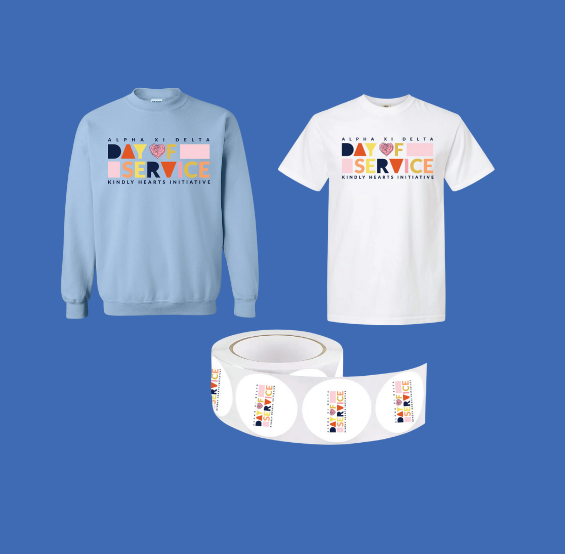
Shop exclusive Day of Service merchandise from Xi Boutique to wear during your service project. Looking to create your own merch? Email custom@xiboutique.com to great a custom, bulk order for your chapter or association. Allow at least 3 weeks for custom orders.